

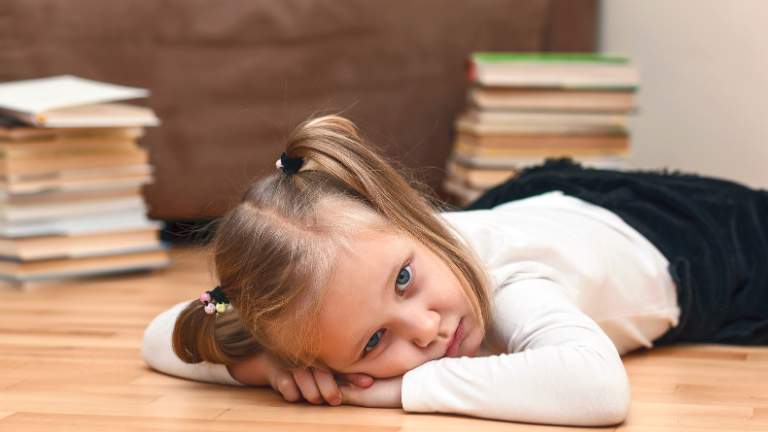
Does your child seem settled and well-behaved at school, only to become emotional, overwhelmed or exhausted when they get home? Or perhaps you see behaviours at home that their teachers simply don’t recognise.
Children can behave differently at school and home because the school day places lots of demands on them. They may be working hard to manage their emotions, follow instructions, cope with noise and social situations, and meet expectations. Once they get home to a familiar environment, that effort can sometimes catch up with them.
This can be confusing for parents, but it is not unusual. The difference in behaviour can often give useful clues about what a child is finding difficult and what support they may need.
Why Is My Child Fine at School but Struggles at Home?
School can place lots of demands on a child. They’re expected to concentrate, follow instructions, manage friendships, cope with noise and transitions and regulate their emotions throughout the day.
Some children work incredibly hard to manage these expectations at school. Once they get home to a familiar and safe environment, all of that effort can catch up with them.
You might notice tears, anger, withdrawal, difficulty with simple requests or a need for lots of quiet time after school.
Could My Child Be Masking at School?
Sometimes, the difference between home and school behaviour can be linked to masking.
Masking is when a child consciously or unconsciously hides behaviours, feelings or difficulties in order to fit in or meet the expectations around them. It is often discussed in relation to autistic children and those with ADHD, although children can mask for different reasons.
A child who appears calm and engaged in the classroom may still be experiencing anxiety, sensory overload or difficulties with attention and social interaction.
This is why observations from both parents and teachers can be so valuable when trying to understand a child’s needs.
What Can Parents Do?
Rather than seeing after-school behaviour as simply “bad behaviour”, try to think about what your child may be communicating.
They might need time to decompress before talking about their day, fewer demands when they first arrive home or a predictable after-school routine. Some children benefit from movement, a favourite activity or simply having some quiet time.
It can also help to speak to your child’s school. Sharing what you’re noticing at home can help teachers build a fuller picture, particularly if your child’s difficulties aren’t immediately visible in the classroom.
When Should I Seek Further Support?
Every child will have difficult days. However, if the difference between school and home is persistent, or your child regularly seems anxious, exhausted or overwhelmed, it may be worth exploring what could be contributing to this.
At Tabla Psychology, we look beyond behaviour to understand why a child may be struggling. By listening to families, working with schools and understanding the child as a whole, we can help identify their individual strengths and needs.
If you’re concerned about your child’s behaviour at home or school and would like some support understanding what might be going on, get in touch with Tabla Psychology through our website.
