Tabla Psychology provides comprehensive ADHD assessments for children and young people, delivered by experienced psychologists with specialist training in neurodevelopmental assessment.
Our assessment process is informed by relevant NICE guidance and recognised diagnostic criteria, including DSM-5.
We consider developmental history, clinical interviews, information from parents and schools, standardised rating scales, direct clinical observation and the impact of any difficulties across everyday settings.
We also explore factors that may overlap with, contribute to or occur alongside ADHD, including autism, anxiety, emotional wellbeing, learning differences, sleep and sensory processing needs.
Our aim is to provide an accurate understanding of each child’s profile, whether or not the assessment identifies ADHD, together with practical recommendations for home, education and further support.
Why families choose Tabla Psychology for ADHD assessments
Families trust Tabla Psychology because of our experienced team, detailed assessments and warm, child-friendly approach.
- National Institute for Health and Care Excellence (NICE) assessment frameworks
- HCPC-registered Clinical and Educational Psychologists
- Evidence-based tools
- Reports recognised by the NHS, schools and local authorities
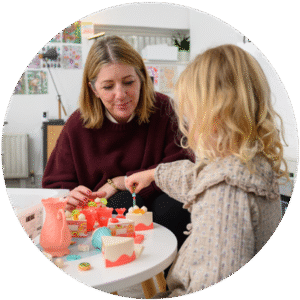
- A play-based approach that helps younger children feel relaxed, engaged and understood
- In-person assessments and ongoing support
A calm, welcoming place for children and families
Based on a farm in a converted dairy, the clinic offers a peaceful setting away from the feel of a busy medical environment. Freddie, our gentle service dog, is often there too, helping many children feel more comfortable during their visit. You can view our clinic here.
The first step: Comprehensive Pre-Screening
Before proceeding with a ADHD diagnostic assessment, Tabla Psychology undertakes a Comprehensive Pre-Screening process.
This enables our psychologists to explore the presenting concerns, developmental history, strengths, areas of difficulty and wider factors that may require consideration.
The purpose is to determine the most appropriate next steps, which may include a full diagnostic assessment, consideration of other needs or recommendations for further support.
Pre-Screening is not itself a diagnostic assessment and does not independently confirm or exclude ADHD.
Find out more about our Comprehensive Pre-Screening here.
What does the assessment involve?
Our assessment process is thorough, child-centred, and designed to help children and teens feel as comfortable as possible.
The assessment includes:
- questionnaires for parents and school
- a clinic appointment for your child or teen
- QbCheck, an objective measure that may form part of the assessment
- further activities and clinical exploration where appropriate
- screening for related neurodevelopmental and learning needs
- onward referral to prescribing practitioners if appropriate and requested
We know that children are not all the same, and neither are assessments. We work thoughtfully to understand each child as an individual.
School visits
In-School Observations are recommended where appropriate and possible, as it can provide valuable insight into how a child or teenager manages within their everyday school environment.
In-School Observations are usually carried out by Nikki Hammal, SEND Specialist, and can be booked as a separate service. They are subject to availability, travel and scheduling.
What happens after the ADHD assessment?
Following completion of the assessment, our psychologists review and integrate the information gathered, including discussion within our multidisciplinary team where appropriate.
Families receive a comprehensive written report explaining the assessment findings, the diagnostic conclusion and the clinical reasoning supporting that conclusion.
Where diagnostic criteria are met, this is explained clearly. Where they are not met, or further information is required, this is also discussed transparently.
The report identifies strengths, areas of difficulty, relevant support needs and practical recommendations for home, school and everyday functioning.
Fees
The fee for a Child and Teen ADHD Assessment is £1,900.
We also offer a combined ADHD and autism assessment, which can be more cost-effective when both are explored together. As part of our clinical approach, we routinely screen for autism during ADHD assessments (and vice versa).
If you are considering combining assessments, we would be happy to discuss the most appropriate option for your child.
Booking and availability
We offer assessments in person only at our Hampshire clinic. You can book an assessment directly below, or get in touch if you have any questions. We would be happy to help.
Child and Teen ADHD Assessment FAQ
What is ADHD?
ADHD is a brain-based difference which affects regulation of executive skills which include attention, focus, emotions and behaviours.
ADHD is characterised by symptoms of inattention, impulsivity, and in some cases hyperactivity, which can mean that school can be tricky at times and your child or teen may need additional support and understanding to thrive. Often, individuals with ADHD are also talented at sports, creative, funny and thoughtful.
Who carries out the assessment?
Our ADHD assessment team includes Dr Tamasine Black (Lead Psychologist) and members of our Clinical Psychology team. All members of the team are additionally trained in ADHD assessment and diagnosis. They are registered with their professional bodies with enhanced DBS checks.
How is ADHD assessed?
ADHD is assessed through a comprehensive clinical process rather than a single test or questionnaire.
Our psychologists consider developmental and clinical history, structured interviews, standardised rating scales, information from relevant settings and direct clinical observations.
The information is considered together to establish whether the relevant diagnostic criteria are met and to understand the individual’s strengths, difficulties and wider support needs.
Where findings are inconsistent or further information is needed, this is explored before a diagnostic conclusion is reached.
Does the assessment follow NICE guidance?
Our ADHD assessments are informed by NICE guideline NG87 and recognised diagnostic criteria.
NICE recommends that ADHD diagnosis is based on a full clinical and psychosocial assessment by an appropriately qualified professional with specialist training and expertise.
At Tabla Psychology, we integrate developmental history, structured clinical assessment, information from relevant settings and consideration of functional impact and possible alternative explanations.
No individual questionnaire or computerised attention test is sufficient to establish an ADHD diagnosis independently.
Do you prescribe medication?
We are not a prescribing service. However, we can liaise with appropriately qualified prescribing professionals where appropriate.
Our ADHD assessments follow the relevant NICE guidelines, and our reports provide detailed clinical information that prescribing professionals can consider as part of their own assessment and decision-making.
Is there any follow up support?
We offer continued psychoeducation in the form of single or ongoing 50-minute sessions with our Lead Psychologist, Dr Tamasine Black, or a member of our Clinical Psychology team, depending on availability. Psychoeducation is an evidence-based therapeutic intervention for clients that provides information and support to better understand and cope with ADHD. These are charged separately at £120per session.
What if I am interested in several of your services?
We can combine and add any of our assessments or our ongoing support sessions.
What we cannot help with
As we are not a crisis service, we are unfortunately unable to offer assessment of mental illnesses including bipolar disorder, psychosis, an established eating disorder or in cases where there is extensive self-harm or suicidal ideation.
Who should I speak to in case of an emergency?
We are not a mental health crisis service so if you have immediate concerns about your child or young person’s wellbeing, please contact the emergency services or your local NHS Child and Adolescent Mental Health Service crisis telephone line.
Other useful organisations include:
Childline: 0800 1111 https://www.childline.org.uk/get-support/contacting-childline/
Samaritans: 116 123 or text “Shout” to 85258.
Will CAMHS accept our report?
We adhere to the guidelines and standards required for our report to be used in a range of settings, including CAMHS.
The diagnostic report needs to evidence compliance with the NICE guidelines:
“ADHD is a valid clinical disorder that can be distinguished from coexisting conditions (although it is most commonly comorbid) and the normal spectrum. ADHD differs from the normal spectrum because there are high levels of hyperactivity/impulsivity and/or inattention that result in significant psychological, social and/or educational or occupational impairment that occurs across multiple domains and settings and persists over time.”
The report needs to be from a Consultant Psychiatrist, Paediatrician or another appropriate clinician who is qualified to make a diagnosis. Within the report, there must be evidence of hyperactivity, concentration difficulties and impulsivity with evidence of pervasiveness, i.e. seen in a variety of settings such as home, school and social settings.
The evidence should include:
1. A full clinical and psychosocial assessment of the person – this should include a discussion about behaviour and symptoms in the different domains and settings of the person’s everyday life
2. Connors forms or SNAP IV – these are not diagnostic tools in themselves but serve as an addition to formulation
3. Symptom history in different domains (home and school)
4. Clinical or school observation
5. Mental state examination
6. Detailed developmental and psychiatric history to include:
- Genogram
- Family health/social history
- Any trauma history
- Pregnancy and birth
- Acquisition of developmental milestones
- Childhood illnesses
- Communication
- Relationship with peers and adults
- Attachment
- Eating and sleeping
- Educational history
- Social and emotions skills
- Routines and attitude to change
- Co-morbid conditions
7. Schools information to include:
- Report on behaviour in school
- Academic ability
- Any learning difficulties
- Peer relationships
- Communication difficulties
- Sensory issues observed within the school environment
- Inventions currently being offered or previously tried